







ss_blog_claim=dc5c7b155677d56522ec11a19c3b1467

31
October
2007

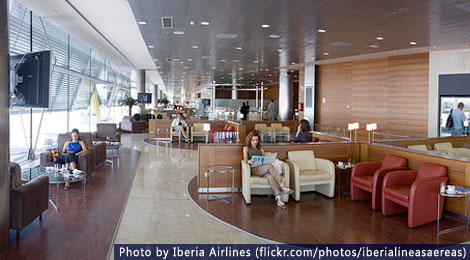
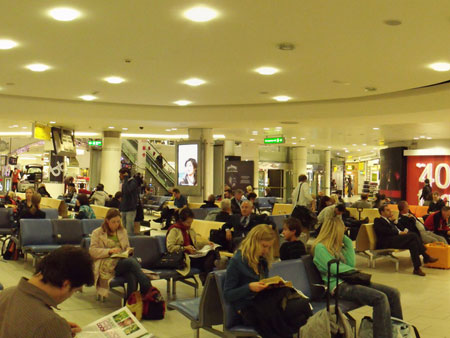
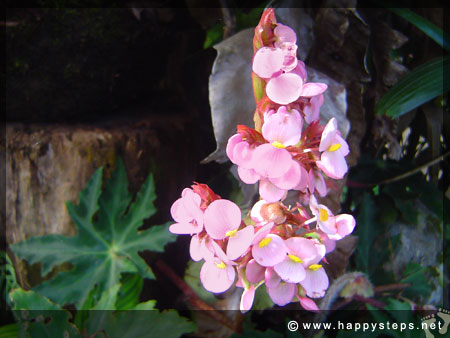
When I’m not visiting another place, riding in a bus that would take me to another island or waiting at the airport lounge, my steps usually wander right here at home. Yup, the garden outside our house, though not that spectacular and well-landscaped, provides a happy trip of sorts among the plants and blooms. I’m sharing here some of those pretty flowers that seem to smile at you as you pass them by.

kalachuchi-350x316
Bangkok Kalachuchi

whiteangel-350x316
White Angel

orchids-350x316
Orchids

Photos taken from my site ideasnpink.


28
October
2007

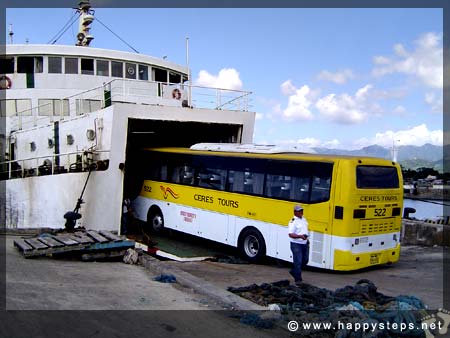
Being a native of Negros and having studied in Cebu with my siblings, we regularly traveled with Bacolod-Cebu buses via the San Carlos-Toledo route which goes like this:

1. Get onboard bus at the Ceres terminal in Bacolod (make sure it has the Bacolod-Cebu trip pasted on its front windows, LOL)

2. Bus departs as scheduled (passing through towns and cities such as Talisay, Silay, Victorias, etc.) until it arrives at the San Carlos port in the eastern part of the Negros Island facing Cebu. Estimated travel time: 3 hours

3. The bus is then loaded in an inter-island vessel or barge. Estimated travel time: 1 hour and 45 minutes to 2 hours

4. Bus arrives at the Toledo port (in the western part of Cebu) and is unloaded from the barge and resumes its trip (passing by towns such as Naga, Minglanilla, Pardo, etc.). Estimated travel time: 1 hour

5. Bus arrives at the Cebu City south terminal.

Alternate routes for Bacolod-Cebu:

1. Via Escalante (Negros Occidental) to Tabuelan (northwestern part of Cebu)

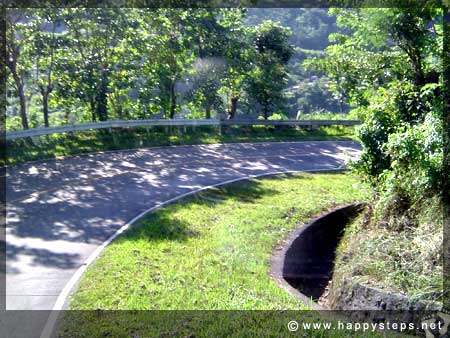
2. Via Don Salvador Benedicto to San Carlos which is the fastest route since this is a cross-country trip from Bacolod to San Carlos passing through the mountains of Mt. Kanlandog. Estimated travel time from Bacolod to San Carlos: 1 hour

26
October
2007

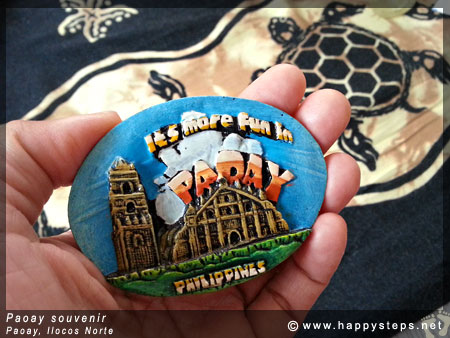
Saan ang pasalubong ko?

The phrase above, roughly translated to English, means “Where’s my pasalubong?” This is the usual question most Filipinos would ask you, either teasingly or demandingly, once they know you’ve been recently on a trip.

Pasalubong is part of the Filipino culture and means a token or a gift you hand over to your friends and loved ones upon arriving home - whether you came from a grand vacation in Europe or a 3-day business affair in Subic. It could be a famous food or delicacy of the place you visited or one of their native handcrafted souvenirs. Other usual pasalubongs are chocolates, clothing especially T-shirts, key chains, bags, baseball caps and all sorts of interesting keepsakes.

The pasalubong is a travelers’ thoughtful way of cheering up family and friends when visiting them. It’s also a way of bringing home a part of the journey to those left behind.


24
October
2007

The Thais revere and love elephants. Their respect for these big creatures is evident in their art and culture. You can see some elephant sculptures and statues, wooden carvings, paintings, artwork, handcrafted bags, key chains, and souvenirs. Even some of their decorative shrubs are elephant-shaped. So, if you happen to be in Thailand, it’s a must to witness an elephant show (playing football, doing tricks, etc.) and yes, you have to ride one of them. ;)

Elephant riding in Thailand
A first ride for Dad and Mom at the Nong Nooch Garden in Pattaya

Elephant riding in Thailand
Tony and Leen taking it easy with the ride at the Nong Nooch Garden in Pattaya

Elephant riding in Thailand
A tourist enjoying an elephant ride in the streets of Ayutthaya


19
October
2007

Grand Palace

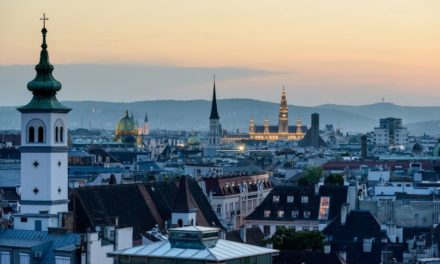
Yes, I do agree, Thailand is such an amazing country, being one of Asia’s top tourist destinations with its grand combination of beautiful ancient temples, historical ruins, contemporary buildings and busy malls. Its international airport, the Suvarnabhumi Airport (pronounced as su-wan-na-poom) is one of Southeast Asia’s busiest, accommodating numerous flights within the region and worldwide, and boasts of having the world’s highest air traffic control tower.

I consider Thailand as my second home country having taken up my graduate studies at the Asian Institute of Technology (AIT) in the province of Pathumthani which is about an hour away from the capital city of Bangkok. It was also my first time to be stepping into another Asian country, though adjusting to the new environment was not a big thing since the weather and surroundings are pretty much the same as my home country, the Philippines.
The only thing that gave me a bit of challenge was the language barrier since most of the Thais don’t speak English. It’s not a big problem though since most of them are polite and friendly, especially the sales people at the malls and shops who try their best to accommodate your needs. Even if I have stayed and worked for some years in Thailand, and oftentimes visiting whenever I have some projects (I’ve been there twice last year), I still can’t get enough of this place, and there’s always that sad and wistful feeling whenever I am about to go home. Yes, there are still so many things to learn and discover about this country.

8
October
2007

Maybe it’s innate in us, this desire to explore new places and discover new sights. I don’t know about you but there’s always this feeling of wanting to escape, of being in a different environment and culture and meeting new people. With most of us being busy with our careers and other activities, to travel and visit other places might just be the change we need.